Hyatt Hotels, EAME region, 2023
Accessibility, culture, and bookings at scale.
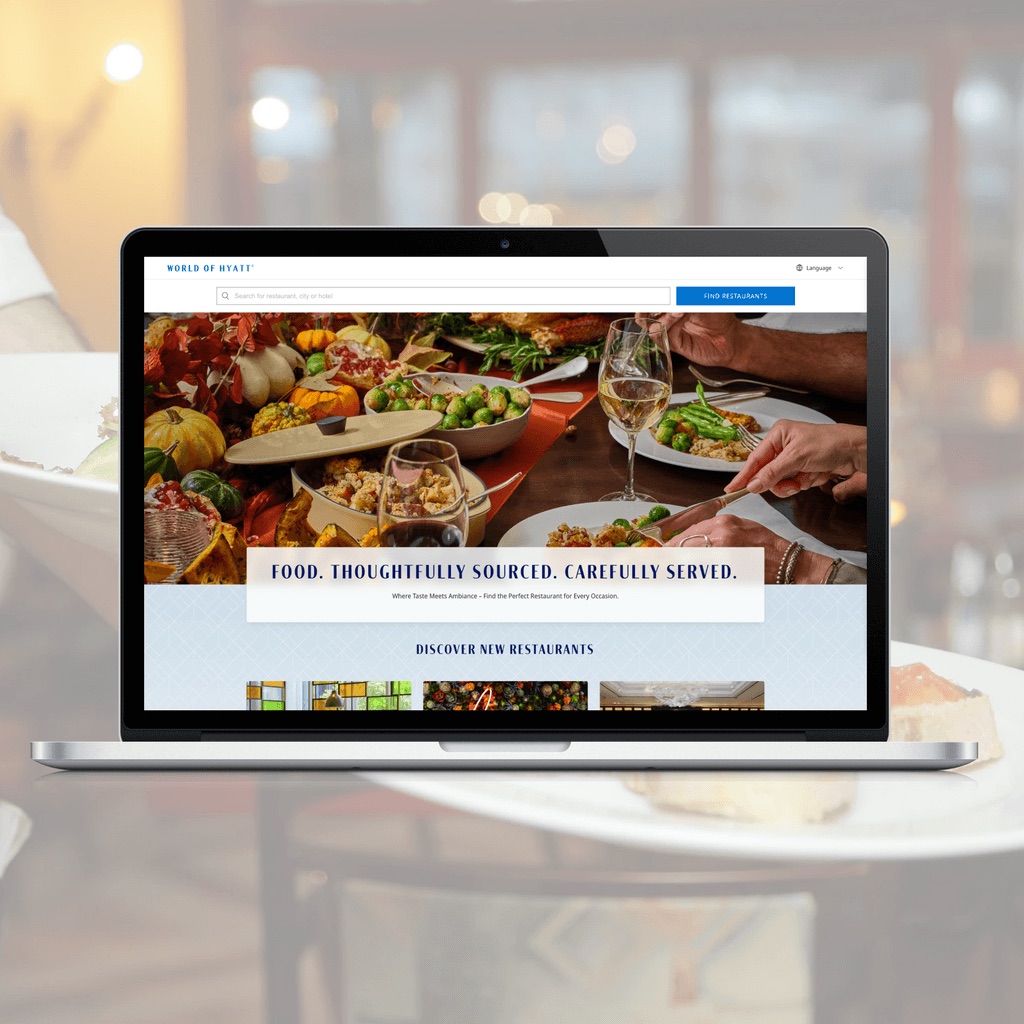
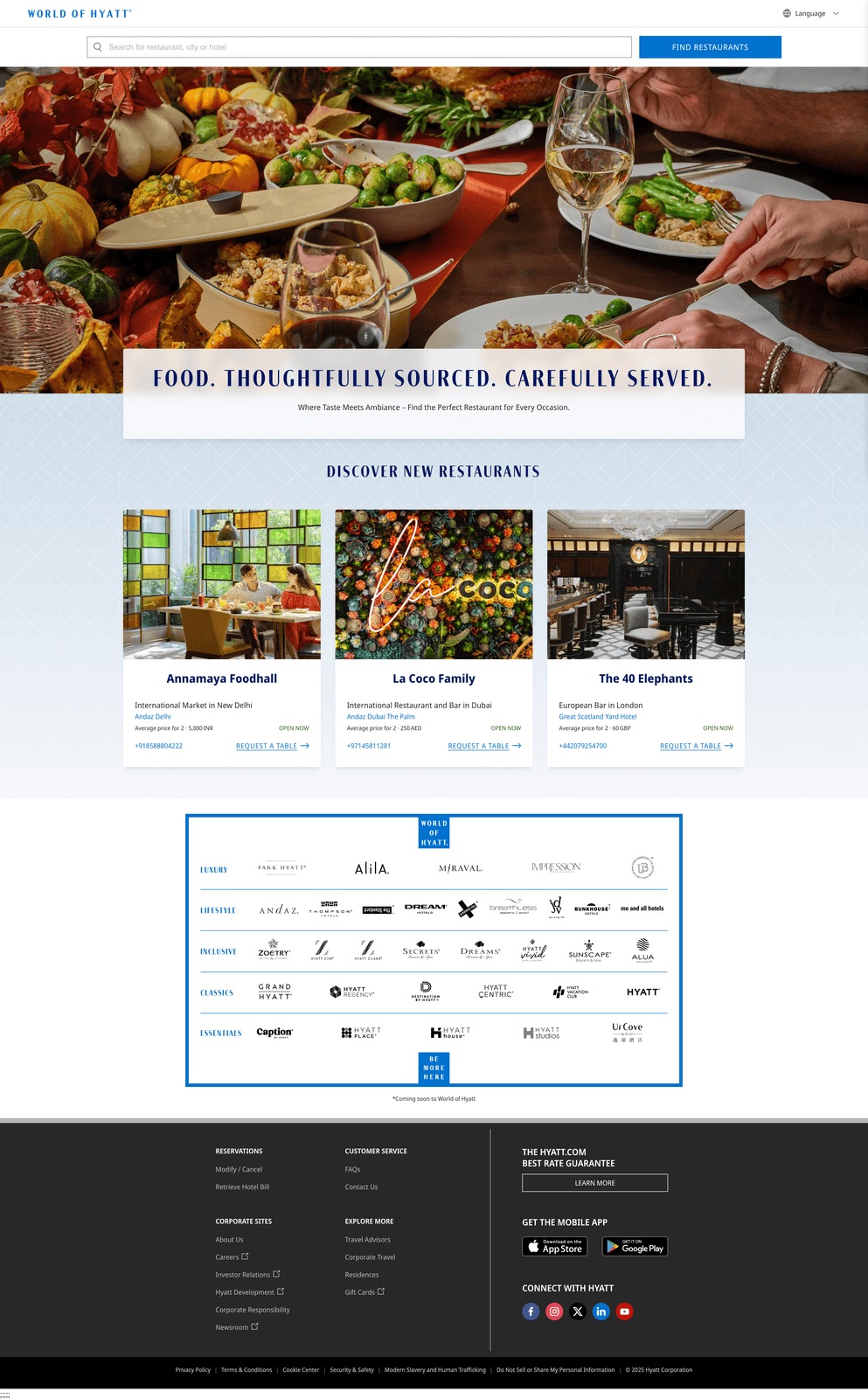
Hyatt's restaurant websites across Europe, Africa, and the Middle East were fragmented, inaccessible, and culturally generic. Picture a guest in Dubai during Ramadan, looking for an iftar table on a website designed for Chicago. I closed that gap: research on the ground, one component system, accessibility ahead of the law. Bookings more than tripled.
- Role
- Lead Product Designer, EAME
- Scope
- UX strategy, design system, accessibility, research
- Team
- Solo designer, bridging Chicago HQ, marketing, and engineering
- Year
- 2023
01 Impact
02 Context
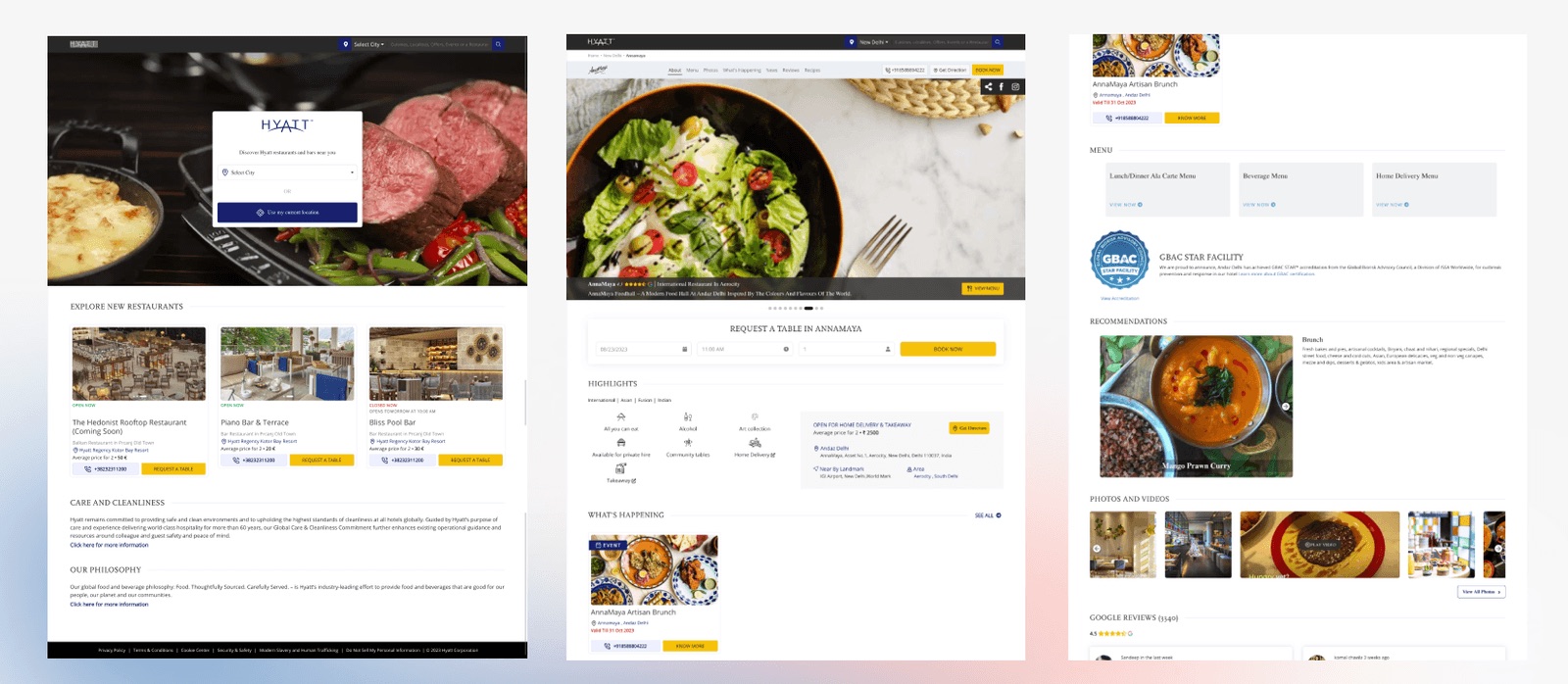
Hyatt has one of the strongest brands in hospitality, but its regional restaurant experience did not live up to it: outdated UI patterns, fragmented brand expression, and no accessibility support. The UX ignored local cultural expectations, particularly in the Gulf region, and marketing teams had little autonomy over content or visibility into performance.
03 Research on the ground
- Interviewed 12+ stakeholders across Switzerland, the UAE, Spain, and the US, from marketing leads to hotel managers, to align business priorities and localization needs.
- Ran in-person research in Dubai to ground the design in Islamic cultural context: halal visibility, Ramadan schedules, gender dynamics in dining, and Arabic localization.
- Shadowed CMS workflows with the internal content teams, mapping where the back office slowed marketing down.
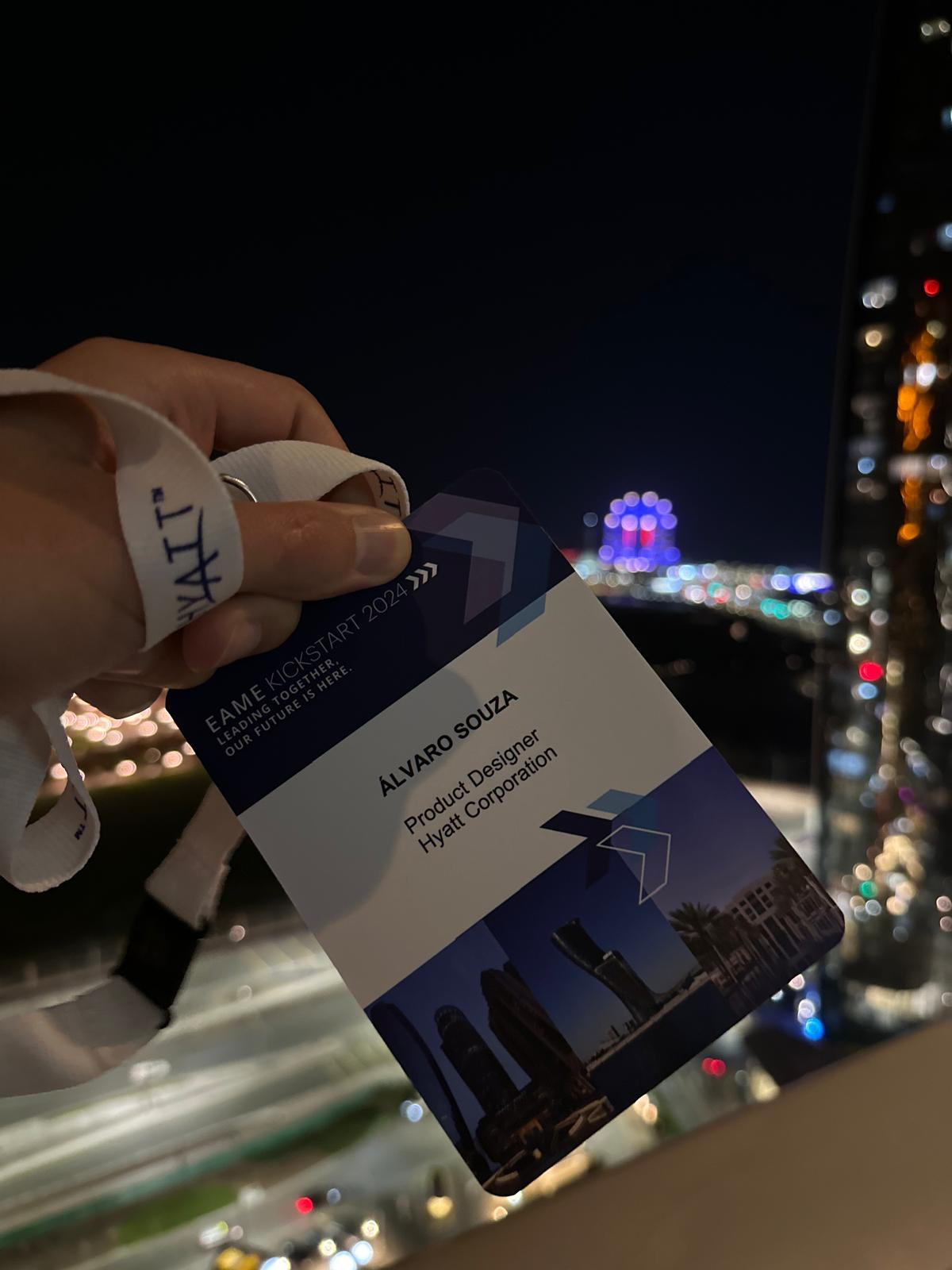
Being the bridge between Chicago HQ and the regions meant spending real time with the people running these restaurants. The cultural requirements that shaped the design, fasting schedules during Ramadan, halal visibility, Arabic localization, came from conversations, not documents.
04 The new system
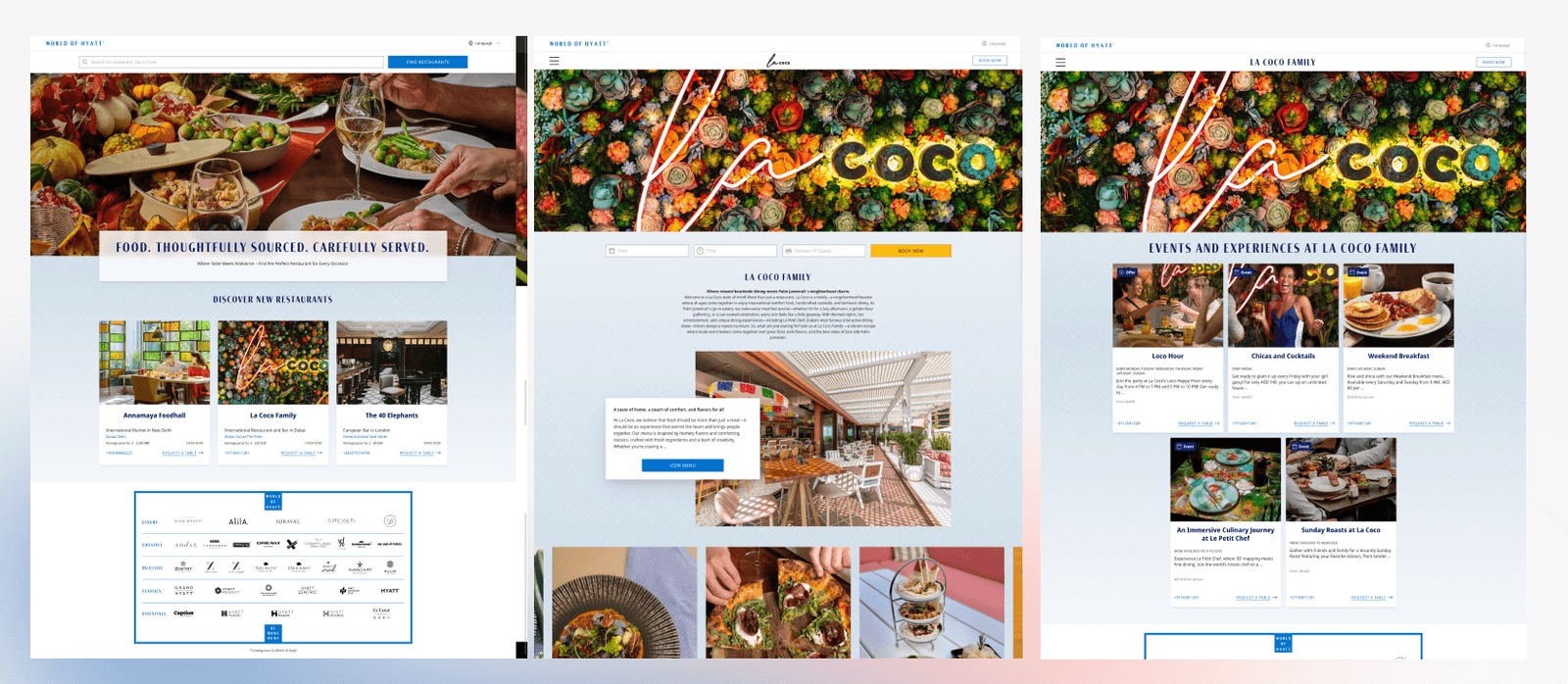
- Unified every regional restaurant experience under one flexible, component-based design system, aligned with Hyatt's global brand: typography, tone of voice, and visual language.
- Rebuilt the experience for WCAG 2.1 ahead of the 2025 European Accessibility Act: keyboard navigation, contrast, ARIA structure, and focus states. A full audit resolved 30+ friction points.
- Partnered with front-end engineers so every component shipped reusable, performant, and compliant.
05 Why it worked
The project treated accessibility and cultural nuance as design constraints from day one, not as retrofits. Designing for the strictest requirements (EAA compliance, Arabic localization, multi-market content) produced a system that scales anywhere. Fewer phone calls and stronger content autonomy meant the results showed up in operations, not just in analytics.
Hospitality online must be as thoughtful and inclusive as it is in person. Regional understanding is what makes global scale possible. If the job is landing global standards in local markets and proving it with numbers, this is my home turf.
Liked this? Want to hear the whole story?
Let’s talk →